
"17th century coffee trends"
70 article(s) found

Brief introduction to the history and development of coffee! Mysterious red fruit has become a popular black gold trend all over the world.
Professional coffee knowledge exchange more coffee bean information please follow the coffee workshop (Wechat official account cafe_style) Let's go back to the 15th and 16th centuries, step by step with time to explore the history and culture of coffee, but also to see how this mysterious black bean has traveled all the way from the most familiar shepherd story to the black gold trend that has swept the world.

The European Coffee trend caused by Mocha in Yemen what is the evaluation of mocha coffee in Europe?
For the exchange of professional baristas, please follow the coffee workshop (Wechat official account cafe_style) this time, I want to talk about the history of mocha, which is loved by coffee lovers. What is the history of Mocha that gives its followers around the world unique acidity and fragrance? Coffee from Yemen to Europe began to spread to Europe in the 17th century. Coffee shops have been set up everywhere, and citizens can drink coffee.

Roasting coffee beans with technology-modified ruts
Although coffee drinking and growing methods developed dramatically in the seventeenth and eighteenth centuries, progress in roasting was very poor. The most common method of roasting at the time was to follow the Middle Eastern method of simple roasting: placing green coffee beans in an iron pan, then moving to a fire and roasting, stirring until the coffee beans were evenly mixed.

Open the era with technology and lead the world coffee trend
Italy is the art capital of Europe, which not only has a brilliant history and culture, but also leads the fashion trend in today's world. At the beginning of the 17th century, coffee became popular all over Europe. In the long-term development, the Italians invented Espresso, known as the Soul of Coffee, thus creating a new school of coffee: espresso. This is where CAFFE PASCUCCI was born to make life
Turkish coffee shops promote the British democratic revolution
The medieval theory of divine kingship began to crumble in England in the seventeenth century, and after the Glorious Revolution the basis of government had shifted from kings as God's agents on earth to the hands of people bound together by social contracts. After experiencing this great historical turning point, it can be said that the creed of modern democratic society, that is, the will of heaven, was formed. Ren Min Tong
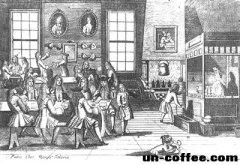
Law, Public opinion and Cafe
The engraving "English Cafe in the 17th Century". Dai Xue (Albert. V. Dicey), English jurist in the nineteenth century. His main works include an introduction to the study of the Constitution and lectures on the relationship between Law and Public opinion in Britain in the 19th Century. The Power of Public opinion by AV Dai Xue Edition: century Publishing Group Shanghai people's Publishing House January 2014 pricing: 39.00 yuan 17th

European Fine Coffee Association scae International barista Certification course scae International Coffee Certificate tuition fee
Professional coffee knowledge exchange more information about coffee beans Please pay attention to the coffee workshop (Wechat official account cafe_style) Coffee has caused a wide range of trends since it was introduced into Europe in the 17th century. Coffee drinking culture has accumulated for more than a century. The in-depth study of coffee has invented the Italian coffee machine, which has been popular for nearly a century, and developed espresso with gold foam.

Coffee dissemination chronology
Arab (eleventh century) Egypt, Syria (13th century) Damascus (16th century) Europe (17th century) the earliest people who planned to grow and eat coffee were Arabs. At the beginning of the eleventh century, people in the Arab region boiled coffee into soup or dried it and then boiled it as stomach medicine. Because of the strict Muslim precepts and forbidden to drink alcohol, Muslims
Coffee dissemination chronology
Coffee spread to Arabia (eleventh century), Egypt, Syria. (13th century) Damascus (16th century) Europe (17th century) the first people to plan to grow and eat coffee were Arabs. At the beginning of the eleventh century, people in the Arab region boiled coffee into soup or dried it and then boiled it as stomach medicine. Because Muslim precepts are strict and alcohol is strictly forbidden, Muslims

The spread and Development History of Coffee in Europe
From the end of the 15th century to the beginning of the 16th century, coffee was already a popular drink in the Middle East, but it was also regarded as a kind of medicine. European ambassadors and merchants in the Turkish Empire also believed that coffee was a healthy drink with special curative effects, and many positive comments helped to import coffee into Europe. Lovov, a famous German doctor and botanist, wrote a book about coffee as early as 1582, but

The Cultural course of Coffee and European Coffee
From the end of the 15th century to the beginning of the 16th century, coffee was already a popular drink in the Middle East, but it was also regarded as a kind of medicine. European ambassadors and merchants in the Turkish Empire also believed that coffee was a healthy drink with special curative effects, and many positive comments helped to import coffee into Europe. Lovov, a famous German doctor and botanist, wrote a book about coffee as early as 1582, but

How to drink coffee at home by first-class baristas flannel cloth hand brewed coffee Nel drip
Professional coffee knowledge exchange More coffee bean information Please pay attention to the coffee workshop (Weixin Official Accounts cafe_style) coffee making process flow chart-Starbucks coffee making process In the 17th and 18th centuries, European coffee was brewed by putting coffee powder and granulated sugar into water, with Turkish coffee as the mainstream. The problem is that coffee grounds stay in the mouth, feel strange, and taste very bad.
Coffee history and culture have been controversial and have been considered important factors affecting children's learning.
Now we all know coffee is a good thing, but people used to think differently. Let's look back at centuries of endless debate over coffee. 16th century: Coffee can make people excited Legend has it that a shepherd named Kaldi in Ethiopia discovered that his sheep suddenly became excited after eating an oily green leaf and red berries. He tasted it himself.

The speed of coffee development is amazing. Ice drop coffee leads the fashion trend.
Chinanews.com, Sept. 11-according to a report on the Guardian website on September 9, this summer, ice drop coffee leads the fashion trend, and this long-standing brewing method provides coffee drinkers with a slightly different fresh taste. You can easily try it at home. But why are baristas so excited? coffee developed at an alarming rate in 2014. First, plain coffee, then dripping the coffee process.
Coffee is growing at an amazing rate. Ice drops lead the fashion trend.
According to the British "Guardian" website reported on September 9, this summer, ice drop coffee led the fashion trend, this long-standing brewing method for coffee customers to provide a slightly different fresh taste. You can easily try it at home. But why are baristas so excited? Coffee growth in 2014 was phenomenal. First white coffee, then drip coffee.
Since when did coffee become popular in China? coffee is the earliest coffee in China.
Coffee has long captured the hearts of people all over the world. But when did it begin to enter the life of human society? Unfortunately, like most food and drink, so far no one has found out. According to the legends left by the ancient belt, we can only imagine the first encounter between people and coffee. There are many biographies about how humans discovered coffee.

Basic knowledge of fine coffee in coffee communication period chronology
Coffee spread to Arabia (eleventh century), Egypt, Syria. (13th century) Damascus (16th century) Europe (17th century) the first people to plan to grow and eat coffee were Arabs. At the beginning of the eleventh century, people in the Arab region boiled coffee into soup or dried it and then boiled it as stomach medicine. Because Muslim precepts are strict and alcohol is strictly forbidden, Muslims

Where was coffee first discovered? where did coffee come from?
Our story now takes us to the early 16th century, when there were so many coffee providers in Mecca that a government official ordered cuts. Unfortunately, Satan in Cairo was used to drinking coffee. He not only repealed the decree, but also removed the position of propagandist. In the 17th century, English women wrote a written petition against coffee because their husbands ignored her.
The spread and Development of Coffee Culture (2)
The spread and Development of Coffee in Europe from the end of the 15th century to the beginning of the 16th century, coffee was already a popular drink in the Middle East, but it was also regarded as a medicine. European ambassadors and merchants in the Turkish Empire also believed that coffee was a healthy drink with special curative effects, and many positive comments helped to import coffee into Europe. Lovov, a famous German doctor and botanist, wrote as early as 1582.

The Development and change of Coffee Macro-environment Analysis on the Future Development trend of Coffee Market in Yunnan
1. Macro-environmental analysis with the development of the times and the further change of people's concept of life, the coffee industry is also developing at a rapid speed. The promotion of urbanization and the construction of culture are the driving force for the development of coffee shops. Government policy support for college students to start a business. Coffee shop with the popularity of coffee culture, petty bourgeoisie atmosphere